Average Reviews:

(More customer reviews)Are you looking to buy Which Side Are You On: An Inside History of the Folk Music Revival in America? Here is the right place to find the great deals. we can offer discounts of up to 90% on Which Side Are You On: An Inside History of the Folk Music Revival in America. Check out the link below:
>> Click Here to See Compare Prices and Get the Best Offers
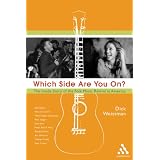
Which Side Are You On: An Inside History of the Folk Music Revival in America ReviewWhat exactly was the folk song craze? How did it happen? Who was involved? What is its legacy today?Dick Weissman, a five-string banjo virtuoso formerly of the folk group The Journeymen, is perhaps the first to tackle this complex subject in depth. He takes a hard look at a wide range of topics with sharp observation, unsentimental analysis, and occasional wit.
Weissman, who partly in self-defense has made himself an authority on the music business, uses that insight to get under the skin of folk entertainers like the Weavers, the Kingston Trio and the many lesser-knowns who, in the early 1950s, put together the folk craze. He goes on to take a look at developments as diverse as skiffle amd blugrass, electric folk and fusion.
But he begins much further back: in the late 19th (Francis James Child and the ballads) and early 20th century with Cecil Sharp, the Lomaxes, and the other folk collectors -- including the lesser-known Lawrence Gellert, who pioneered in collecting songs that got even closer to the black experience. He takes us through the Golden Age recordings of early country music and blues, and early protest music, including People's Artists, and how they influenced what we all thought folk music was. From there he traces the route to 1949 and the breakout of the Weavers - culminating in the blacklisting that shut down some folk entertainers including Pete Seeger along with a number of Hollywood's finest.
"Which Side Are You On" takes in a very broad sweep that makes most other books on the subject look narrow. This is probably the first book ever to put side by side in the same context people as disparate as Alan Lomax, Mississippi John Hurt, Robert Johnson, Bill Monroe, cowboy singers and poets, Ewan MacColl, Peter, Paul and Mary, Doc Watson, Laura Nyro, The Band, Eric Clapton, Neil Young, Tom Waits, New Age music, newgrass, John Fahey, Eliza Gilkyson, Bruce Springsteen, Nanci Griffith, Paul Simon, Sheryl Crow, Jewel, and 21st century folk pop -- not to mention parallel developments in ethnic music such as Cajun, Zydeco, Canadian, Celtic, Hispanic, American Indian, Hawaiian, children's music (who else covers Raffi?) and more.
That makes this book unique in my estimation. Most writers on folk music carve themselves out a stylistic niche - traditional songs, bluesmen, country musicians, folk-rockers -- and stay within it. Weissman takes the opposite approach, showing how widely folksong has been impacted by developments in popular, ethnic, rock and other forms of music, and how its ways of thinking and performing have been changed by them. The result is a first chance to see the folk scene as a grand parade leading onward into the future, triumphs, foibles and all.
The "folk superstars" are here: Leadbelly. Woody Guthrie. Odetta. Dylan. Phil Ochs. Peter, Paul and Mary. Simon and Garfunkel. Joan Baez. Judy Collins. Joni Mitchell. So are many names that will be new to nearly every reader, with fascinating stories that place them in the ongoing folk thread that winds through American music. Tracing stardom as well as the obscure through the 1970s, 80s and 90s, Weissman brings the story of the folk era up to date with incisive coverage of what the thing we call "folk" means now, today: everything from Ani DiFranco and Nickel Creek to the Dixie Chicks and "O Brother Where Art Thou."
There is astute coverage of trends and backgrounds: Folkways, Elektra, Vanguard and the other folk record labels. The folk scene in various parts of the US and abroad, most prominently New York's Greenwich Village, but also Philadelphia, Boston, Newport, Chicago, Denver, Austin, California and elsewhere. How music informed the Civil Rights Movement. Feminist music and musicians. Singer-songwriters. Musical instruments. Radio, folk organizations, print music and performing venues. Folk-rock and country-rock.
Along the way Weissman poses some tough questions folkniks often prefer to duck. What about authenticity vs. "selling out?" What did stardom mean for the few folkies who achieved it? What did "going electric" mean for singers who believed their roots lay in casual home-made music of centuries past? How did folk-inspired songwriting change as it grew? What has it meant to "bourgeoisify" and commodify folk music? And how did the business of folk music change the music and the people who made it? These are only some of the questions this book addresses.
"Which Side Are You On" is frankly a survey, covering a lot of territory. Hence it cannot go deeply into some of its subject matter. Still there are surprising moments of insight, and enough detail to feast on for hours.
If you want a smart practitioner's bird's-eye view of what folk is, does, and means - and are ready for a few side trips into allied kinds of music that draw intriguing parallels - this is the book for you.
Which Side Are You On: An Inside History of the Folk Music Revival in America Overview
Want to learn more information about Which Side Are You On: An Inside History of the Folk Music Revival in America?
>> Click Here to See All Customer Reviews & Ratings Now
