Showing posts with label ancient egypt. Show all posts

Lives of the Ancient Egyptians: Pharaohs, Queens, Courtiers and Commoners Review

Lives of the Ancient Egyptians: Pharaohs, Queens, Courtiers and Commoners
Average Reviews:

(More customer reviews)
Are you looking to buy Lives of the Ancient Egyptians: Pharaohs, Queens, Courtiers and Commoners? Here is the right place to find the great deals. we can offer discounts of up to 90% on Lives of the Ancient Egyptians: Pharaohs, Queens, Courtiers and Commoners. Check out the link below:

>> Click Here to See Compare Prices and Get the Best Offers

Lives of the Ancient Egyptians: Pharaohs, Queens, Courtiers and Commoners ReviewToby Wilkinson's "Lives of the Ancient Egyptians" is published by Thames & Hudson. That in itself, as lovers of books on art and archaeology will attest, means superb physical quality with thick, glossy pages, and crisp printing, and well-reproduced illustrations. But the illustrations here illuminate rather than overwhelm Wilkinson's text.
The author states that he set out, through the presentation of short biographies, to tell the story of three thousand years of Ancient Egyptian history, cutting across chronological, geographical, and social boundaries. And he has largely succeeded. As Wilkinson himself states in his foreword, the limits of available evidence of course did constrain him from achieving a uniformity of coverage. A full tenth of the included biographies deal with the last half of the 14th century BCE, the time of Akhenaten and Nefertiti and their successors (a fascinating period, to be sure, and deserving of this closer focus). The majority of the biographies are those of kings and queens, but a good number of relatively low-level commoners are included as well, evidence permitting.
All in all, "The Lives of the Ancient Egyptians" is a vivid presentation of a wonderful stretch of history, from Narmer, the first pharaoh of the First Dynasty to Cleopatra VII and the fall of Egypt under Roman domination, looking at day-to-day life as well as great events. The organization of the book, mostly biographies a few pages long, makes it ideal for browsing, dipping in for a quick read and then coming back to it days or weeks later (which is not to say that it cannot or should not be read as a continuous kaleidoscope of Ancient Egyptian history). This volume immediately won a permanent spot on my over-crowded bookshelves.Lives of the Ancient Egyptians: Pharaohs, Queens, Courtiers and Commoners OverviewThe greatest civilization of the ancient world revealed through the tales of the men and women, both rulers and commoners, who lived in those times.The one hundred biographies included here give voice not only to ancient Egypt's rulers but also to the people who built the great monuments, staffed government offices, farmed, served in the temples, and fought to defend the country's borders. Spanning thousands of years of ancient Egyptian history, the book offers a fresh perspective on an always fascinating civilization through the lives of:•the god-kings, from great rulers like Khufu and Ramesses II to less famous monarchs such as Amenemhat I and Osorkon;•Egypt's queens: the powerful Tiye, the beautiful Nefertiti, Tutankhamun's tragic child-bride Ankhesenamun, and the infamous Cleopatra;•the officials who served the pharaoh: the architect Imhotep who designed the first pyramid; the court dwarf Perniankhu; and the royal sculptor Bak;•ordinary women who are often overlooked in official accounts: Hemira, a humble priestess from a provincial Delta town, and Naunakht, whose will reveals the trials and tribulations of family life;•commoners and foreigners such as the irascible farmer Hekanakht, the serial criminal Paneb, and Urhiya, the mercenary who rose to the rank of general in the Egyptian army.Profusely illustrated with works of art and scenes of daily life, Lives of the Ancient Egyptians offers remarkable insights into the history and culture of the Nile Valley and very personal glimpses of a vanished world. 200 illustrations, 80 in color.

Want to learn more information about Lives of the Ancient Egyptians: Pharaohs, Queens, Courtiers and Commoners?

>> Click Here to See All Customer Reviews & Ratings Now
Read More...

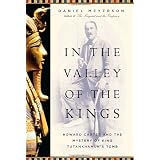
In the Valley of the Kings: Howard Carter and the Mystery of King Tutankhamun's Tomb Review

In the Valley of the Kings: Howard Carter and the Mystery of King Tutankhamun's Tomb
Average Reviews:

(More customer reviews)
Are you looking to buy In the Valley of the Kings: Howard Carter and the Mystery of King Tutankhamun's Tomb? Here is the right place to find the great deals. we can offer discounts of up to 90% on In the Valley of the Kings: Howard Carter and the Mystery of King Tutankhamun's Tomb. Check out the link below:

>> Click Here to See Compare Prices and Get the Best Offers

In the Valley of the Kings: Howard Carter and the Mystery of King Tutankhamun's Tomb ReviewOur fascination with things from ancient Egypt seems as if it will never go away. If you don't know any other names from the age, you know the name of King Tutankhamun, the discovery of whose tomb in 1922 created a sensation in Egyptology that caught popular, scientific, and historical attention which has never waned. We only know of Tutankhamun because of the good fortune, and the hard work in conquering bad fortune, of Howard Carter, who by force of will turned himself into a skilled excavator, without getting a formal education. His story is at the center of _In the Valley of the Kings: Howard Carter and the Mystery of King Tutankhamun's Tomb_ (Ballantine Books) by historian Daniel Myerson, who presents Carter as a fine example of a flawed personality who succeeded through tenacity and sheer eagerness to work. There is also a good summary of the history of Tutankhamun and his immediate ancestors, as well as reflections on the rules of the archeological game of the time.
Carter was low-born, with roots going back to the rural British lower class. He happened to have some skill at painting and sketching, and was doing so at the country estate of a family that was wild about Egyptian art. This led to his dream of going to Egypt, in 1892 at age seventeen. He went as a mere copyist, but became intoxicated with archeology. He lucked into an assignment with legendary William Matthew Flinders Petrie, and was quickly assigned his own excavation of Akhenaten's great temple. He became a chief inspector of archeological sites, but in a ruckus in which Egyptian guards struck belligerent Frenchmen who were trying to enter a prohibited area, Carter backed the guards, refused to apologize and was forced to resign. He was then "cold-shouldered by the elite and blacklisted as an excavator." For three years he made his living not with the excavating that he loved, but doing paintings which were sellable, and being a guide-for-hire. He then was joined to the Earl of Carnarvon who was doing some amateur excavating (and doing some of it badly). From 1907 to the start of the First World War, they made important discoveries within the hills of Thebes, with Carter as the brains and Carnarvon as the financial muscle. Carter believed that King Tutankhamen's tomb was within the Valley of the Kings, although everyone warned that no further royal tombs were to be found there. Eventually, in 1922 Carter convinced Carnarvon (very much against Carnarvon's initial wishes) to allow just one more season of digging, and returned to the area himself. A boy stumbled into the top step of a descending staircase, and twelve steps later, Carter found a sealed door with treasure behind it. He wired Carnarvon to come at once from London. There had been dozens of royal tombs discovered already, but none had been intact. The sensational find caused a circus, with cinematographers, reporters, curiosity-seekers, and diplomats showing up, all wanting in. At the same time, Egyptian nationalists were insisting that the spoils were their nation's. Carter was not the man for public relations; he was taciturn and often bad-tempered, and the stubbornness that drove him to success also made it almost impossible to work with him. He was actually evicted from the tomb, only allowed to come back and do his decade of work on cataloguing and preservation after he apologized for his previous attempts at restricting access.
Meyerson writes, "The real curse of Tut's tomb was that Carter did not die at the moment of discovery." Carter was to live a full lifespan, although Carnarvon did die of "the curse" shortly after the tomb was open. Meyerson points out that there was no such curse, and anyway, Tut would have been happy to have his name and fame broadcast five millennia later, as that was an ideal of Egyptian eternal life. Those who disdained Carter's lack of formal education, breeding, manners, or tact ensured that Great Britain gave him no honors and that he would not be allowed to receive any from other lands. There was also no mention of his name in the halls of the Egyptian museum which held the hoard he had discovered. Meyerson's is a portrait of one particular archeologist at work, one whose stubbornness and intensity led him to his greatest find and also kept him from the full appreciation he deserved in his lifetime.
In the Valley of the Kings: Howard Carter and the Mystery of King Tutankhamun's Tomb Overview

Want to learn more information about In the Valley of the Kings: Howard Carter and the Mystery of King Tutankhamun's Tomb?

>> Click Here to See All Customer Reviews & Ratings Now
Read More...

Temple Festival Calendars of Ancient Egypt (Liverpool Monographs in Archaeology and Oriental Studies.) Review

Temple Festival Calendars of Ancient Egypt (Liverpool Monographs in Archaeology and Oriental Studies.)
Average Reviews:

(More customer reviews)
Are you looking to buy Temple Festival Calendars of Ancient Egypt (Liverpool Monographs in Archaeology and Oriental Studies.)? Here is the right place to find the great deals. we can offer discounts of up to 90% on Temple Festival Calendars of Ancient Egypt (Liverpool Monographs in Archaeology and Oriental Studies.). Check out the link below:

>> Click Here to See Compare Prices and Get the Best Offers

Temple Festival Calendars of Ancient Egypt (Liverpool Monographs in Archaeology and Oriental Studies.) ReviewThis book is for the total Egypt enthusiast/ scholar, and gives a detailed translation of the various texts that have come to use age by age regarding the ancient festivals. It is extremely thorough in that regard but my only criticism is that it does not give adequate background on the Egyptian calender to which the dates relate. The so called civic calender was a floating calender within the overall sothic calender, and therefor from year to year the dates of some festivals change as do the solstices etc. There is an interesting book on the calender The Egyptian Calendar a Work for Eternity which gives the needed background. Otherwise very informative but not for light reading.Temple Festival Calendars of Ancient Egypt (Liverpool Monographs in Archaeology and Oriental Studies.) OverviewIn this work, an attempt is made to gather together all the known examples of Ancient Egyptian temple calendars, to reconstruct them whenever practicable and to give the history of this kind of document. The book covers periods from the Archaic all the way to the Greco-Roman. The plates include photographs of the Ramesses II Abydos calendar never previously published.

Want to learn more information about Temple Festival Calendars of Ancient Egypt (Liverpool Monographs in Archaeology and Oriental Studies.)?

>> Click Here to See All Customer Reviews & Ratings Now
Read More...