Showing posts with label french literature. Show all posts

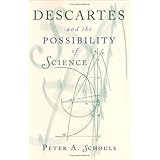
Descartes and the Possibility of Science Review

Descartes and the Possibility of Science
Average Reviews:

(More customer reviews)
Are you looking to buy Descartes and the Possibility of Science? Here is the right place to find the great deals. we can offer discounts of up to 90% on Descartes and the Possibility of Science. Check out the link below:

>> Click Here to See Compare Prices and Get the Best Offers

Descartes and the Possibility of Science ReviewDescartes and the Possibility of Science describes the intellectual structure of modern science as a body of knowledge produced by the Cartesian method. For Des-cartes, science was possible only because of certain features of the very nature of human beings. Schouls focuses on two largely neglected aspects of Descartes' position: the intellectual imagina-tion and free will. Joining these top-ics together within the context of Cartesian doctrine, Schouls opens up a substantially new reading of the Meditations and a more complete picture of Descartes as a scientist. This revisioning of science follows from Schouls' previous study Descartes and the Enlightenment that considers how the philosopher's rationalism became a principle ingredient in the ideological hegemony of Enlightenment reason. In Descartes and the Possibility of Science Schouls asserts that Descartes viewed the intellectual imagination, the source of hypotheses, as crucial to the development of scientific thought. Descartes placed consider-able emphasis on mental power in his discussion of the paths by which humans were to proceed in science, from pure to applied disciplines. Schouls explores the roles of differ-ent kinds of imagination in meta-physics, in pure physics or geome-try, and in the applied sciences. He inquires further that, for Descartes, free will was also indispensable in the pursuit of knowledge. Without it, the scientific enterprise could neither start nor continue. Descartes and the Possibility of Science closes with a discussion of the metaphysi-cal bases of free will, intellectual imagination, and other human functions necessary to the advance-ment of science.Descartes and the Possibility of Science Overview

Want to learn more information about Descartes and the Possibility of Science?

>> Click Here to See All Customer Reviews & Ratings Now
Read More...

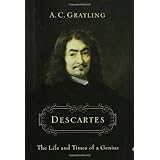
Descartes: The Life and times of a Genius Review

Descartes: The Life and times of a Genius
Average Reviews:

(More customer reviews)
Are you looking to buy Descartes: The Life and times of a Genius? Here is the right place to find the great deals. we can offer discounts of up to 90% on Descartes: The Life and times of a Genius. Check out the link below:

>> Click Here to See Compare Prices and Get the Best Offers

Descartes: The Life and times of a Genius ReviewI found Grayling's "Descartes" to be an interesting read from a pure biographical perspective. Although I have an interest in philosophy, Grayling writes in a way that reasonably intelligent laypersons can understand. Unfortunately, though, Grayling treads very little new ground, relying on past biographers of Descartes to do the legwork for him. The only new ground the author treads is relaying the proposition that Descartes was a spy. I actually find this plausible for two reasons: one, it explains Descartes' travelling; two, Descartes doesn't talk about his travelling much in his writings. These two factors give Grayling's hypothesis some weight. Grayling doesn't take too much time expositing Descartes' philosophy, but in an appendex he does give a brief introduction to it. Like I mentioned, the author does rely on other biographers for information, but that fact doesn't take away from the quality of the book. One fact that Grayling kept mentioning was that Descartes seemed to want to portray his ideals as acceptable to the church, and also to have his beliefs fit into the framework of "orthodox" theology of the time. I wondered why Grayling kept hitting on this point so many times, and then I came to the following conclusion: Grayling wants to excuse Descartes. One would imagine that if Descartes applied his method to the idea of the existence of God, one would conclude that it would be necessary to doubt, or even reject, the existence of God. Descartes never stated that God didn't exist, nor did he (as far as I know) even doubt it. By not stating that he doubted it, Descartes attempted to stay on good terms with the church. Descartes' later politiking shows me that he was concerned with ensuring his own safety, both physically and financially, which is fine. Grayling doesn't go this far in the book, but I think it is a necessary and unavoidable conclusion; I'm just surprised Graying didn't call Descartes out on it. To conclude this review, Grayling's bibliography is strong, giving the reader lots of roads to travel if one wants to explore the subject further, which I plan to do.Descartes: The Life and times of a Genius Overview

Want to learn more information about Descartes: The Life and times of a Genius?

>> Click Here to See All Customer Reviews & Ratings Now
Read More...