Showing posts with label david halberstam. Show all posts

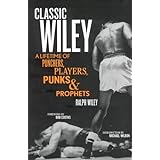
Classic Wiley: A Lifetime of Punchers, Players, Punks and Prophets (Great American Sportswriters) Review

Classic Wiley: A Lifetime of Punchers, Players, Punks and Prophets (Great American Sportswriters)
Average Reviews:

(More customer reviews)
Are you looking to buy Classic Wiley: A Lifetime of Punchers, Players, Punks and Prophets (Great American Sportswriters)? Here is the right place to find the great deals. we can offer discounts of up to 90% on Classic Wiley: A Lifetime of Punchers, Players, Punks and Prophets (Great American Sportswriters). Check out the link below:

>> Click Here to See Compare Prices and Get the Best Offers

Classic Wiley: A Lifetime of Punchers, Players, Punks and Prophets (Great American Sportswriters) ReviewWiley, Ralph. Classic Wiley. Hyperion: USA, 2005
Heart
Home Library
Collection of work
A collection of the best work from the late Ralph Wiley, this is not just a collection of his best work but also a look into the life and mind of one of the most influential African-American sports journalist. We see how Ralph Wiley responds to certain historical sports moments/ issues, such as minority owner ship, Mike Tyson and September 11.
Although this book is a collection of Wiley's greatest work it is much more than that. This book illustrates the unique writing style of Ralph Wiley. Wiley exemplifies a style that is brash and to the point yet not arrogant. He writes in a way that you respect his stand on issues even though you may not agree with it. One of Ralph Wiley's favorite sports to cover was boxing he was made famous by his articles in the Oakland Tribune about Roberto Duran's famous "No mas" and his depiction of fights like Leonard vs. Hearns II. Theses pieces are what sprang Wiley's name into the infamous Sports Illustrated which he was a writer for since the late 80's. After SI he continued to have success as a columnist for ESPN.com. The columns he wrote there were extremely personal. Columns such as WWJD (What Would Jackie Robinson Do), His response to the lack of African American ownership in the new millennium expressed his built up anger of major sports. Also his article Why We Need Sports Now sent a message to American people following the terrorist attack of 9/11.The book is excellent and a great book for any aspiring journalist.
Classic Wiley: A Lifetime of Punchers, Players, Punks and Prophets (Great American Sportswriters) OverviewThe definitive collection from the late Ralph Wiley-pioneering journalist, acclaimed author of Why Black People Tend to Shout, and a towering voice in the world of sportswriting hen Ralph Wiley, a columnist for ESPN.com and a former writer for Sports Illustrated, passed away on June 13, 2004, he left behind a rich legacy of written work. This volume brings together Wiley's best feature stories from Sports Illustrated, columns from ESPN.com, his 'Parting Shots' from the ESPN television show The Sports Reporters, and excerpts from his books and screenplays.

Want to learn more information about Classic Wiley: A Lifetime of Punchers, Players, Punks and Prophets (Great American Sportswriters)?

>> Click Here to See All Customer Reviews & Ratings Now
Read More...

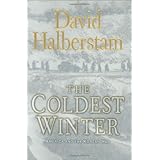
The Coldest Winter: America and the Korean War Review

The Coldest Winter: America and the Korean War
Average Reviews:

(More customer reviews)
Are you looking to buy The Coldest Winter: America and the Korean War? Here is the right place to find the great deals. we can offer discounts of up to 90% on The Coldest Winter: America and the Korean War. Check out the link below:

>> Click Here to See Compare Prices and Get the Best Offers

The Coldest Winter: America and the Korean War ReviewHaving served two tours in the infantry in Korea during the War, and being a Korean War buff, I have a different view of the book than most of the reviewers. Unfortunately, the reviewers think that this book is about the Korean War. In part that is true but the real theme of the book is about how General Douglas MacArthur screwed it up.
The book is not a complete history of the Korean War as some reviewers have touted. It is anything but that. The book centers on the time period during which Gen. MacArthur was in command, both pre-war and until Pres. Truman relieved him of command. What little remains is more of an epilog very briefly describing the aftermath. That is why the book title is "The Coldest Winter" because it focuses on the disastrous defeat of the UN troops during the winter of 1950 as the result of MacArthur's bungling.
Because the book was billed as the most comprehensive history of the Korean War, I was lulled into reading it, only to be sorely disappointed. The first eight months of the War have been extensively covered in books and documentaries with the remaining 2 1/2 years given only cursory exposure, even though several major battles were fought during that period, so Halberstam doesn't expose any new ground. He just regurgitates material already written although he does it in an interesting fashion.
What I had hoped to read about was a thorough rendition of the history following MacArthur and the political decisions that colored the War and that was not there in the book for me. Not that I am not aware of them but a lot happened that is not generally known about and I hoped that Halberstam, with his reputation, would expose that material so that it become common knowledge to those studying or even interested in the War.
Some tout the book as telling the story of the historic escape of the First Marine Division from the Chosen Reservoir. It doesn't at all. The book tells how the Division Commander ignored MacArthur's orders in not racing to the Yalu and consequently the Marines were able make an orderly retreat, which the Army units were unable to do, but Halberstam provides almost no facts concerning the actual retreat, but when he does, the facts are not always correct. For example, the Chinese blew up the bridge between Koto-ri and Hungnam which crossed a narrow mountain gorge. Marine engineers then replaced it with a Bailey Bridge that was parachuted in. Halberstam says that it was the Air Force that dropped the bridge but I was on guard on the mountain above the gorge and I saw the bridge dropped from Marine Corps Flying Boxcars.
The book is not even a complete history of the first eight months of the Korean War. Most of it is devoted to certain battles which illustrated the incompetence either of MacArthur or the officers under him. It is only a partial picture of that period of the War but what there is, is done in remarkable detail.
Halberstam doesn't not highlight some of MacArthur's bad decisions as much as they should have been. While he brings out that it would have been a better strategy if the Marines had by-passed Seoul after landing at Inchon and cut off the retreat of the North Koreans, he doesn't give that mistake the emphasis that it warrants because it was a decision that really prolonged the War. Those familiar with the War are very conscious of that but lay readers may not.
Nor does he allude to the fact that MacArthur violated a basic tenant of fighting a War and that is after winning a battle, it is a cardinal principle that you stop and consolidate before resuming the attack. His failure to adhere to that principle was one reason the UN troops were so vulnerable when the Chinese struck.
One lament I have about the book is that it falls well short of providing its readers of what happened after Gen. Ridgeway took command. The book describes how the Chinese were suffering horrendous losses but Halberstam fails to follow through. The UN counter offensive resulted in more heavy losses to the Chinese as they were pushed back into North Korea, particularly on the eastern flank. The entire Chinese front was in such danger or collapsing that the Chinese sought a truce and Pres. Truman's biggest mistake was to agree to the truce. Had the UN rejected the truce offer, the Chinese would have been forced to retreat deep into N. Korea and that would have been a propitious time for the UN to agree to an armistice. Instead, the war went on for over two more years ending on July 28, 1953. It ended then only because a major Chinese offensive designed to push the Marines back across the Imjin River failed and the Chinese again had run out of steam.
Despite its shortcomings , as a book about the blundering of Gen. MacArthur, it is superb. Unfortunately, it was written 50 years too late. MacArthur was a desk general from the start of WWII and remained so during the Korean War. He really botched up the defense of the Philippines but because the Americans needed a hero, he was made a hero instead of a goat. He should have been relieved of his command. He actually played a subordinate role in the Pacific War which was mainly run by the Navy, but we all can be thankful for the atomic bomb, because if the Japanese had not surrendered, MacArthur would have been in charge of the invasion of Japan.The Coldest Winter: America and the Korean War Overview

Want to learn more information about The Coldest Winter: America and the Korean War?

>> Click Here to See All Customer Reviews & Ratings Now
Read More...