Showing posts with label truman. Show all posts

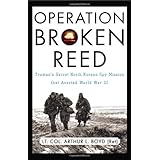
Operation Broken Reed: Truman's Secret North Korean Spy Mission That Averted World War III Review

Operation Broken Reed: Truman's Secret North Korean Spy Mission That Averted World War III
Average Reviews:

(More customer reviews)
Are you looking to buy Operation Broken Reed: Truman's Secret North Korean Spy Mission That Averted World War III? Here is the right place to find the great deals. we can offer discounts of up to 90% on Operation Broken Reed: Truman's Secret North Korean Spy Mission That Averted World War III. Check out the link below:

>> Click Here to See Compare Prices and Get the Best Offers

Operation Broken Reed: Truman's Secret North Korean Spy Mission That Averted World War III ReviewFour-five years back I read a terrific book, "The Secrets of Inchon: The Untold Story of the Most Daring Covert Mission of the Korean War," by Eugene Franklin Clark. I blogged about it Sept. 15 of last year. It is the first-person account of a secret, commando-like mission at Inchon that helped turn the tide of the war in favor of the U.N. side. Clark at the time was a Navy lieutenant who at 39 was "getting a little old for the commando game." The book is the record of his two-week adventure--a hair-raising reconnaissance strikes, night raids, firefights, a blazing naval battle between Chinese sailing junks--among the islands and mudlfats of the communist-held Seoul-Inchon harbor area. Clark wrote it in the 1950s, intending it not for publication but as a keepsake for his wife and children and as a personal memorial to the Korean men and women who fought and in many cases died to help him accomplish his mission. The manuscript lay in a safe deposit box for decades and only came to light because historian and novelist Thomas Fleming happened to come across it in doing research for an article about Clark's exploits.
Now I have found another such book, "Operation Broken Reed: Truman's Secret North Korean Spy Mission That Averted World War III" (Carroll & Graf), similar to it in secretiveness and amazing events. Written (extremely well) by its central character, Lt. Col. Arthur L. Boyd (Ret.), and published in October 2007, it is the story of Boyd's participation as a 20-something Army Signal Corps lieutenant in a super-secret mission in North Korea in January 1952. Written as a compelling narrative rather than as a journal-like chronicle, there is so much about it that I like. The astonishing mission of course, but beyond that Boyd manages to give some flavor of the times and an understanding of his personal circumstances (married with a family). It has tension and a palpable sense of danger, and even touches of humor.
Operation Broken Reed had been authorized at the highest of high levels--President Harry Truman. Only he and his closest advisers, and the bare minimum of lower echelon people needed to get it prepared and in operation, knew of it. The little intelligence on the enemy that Truman had been getting was all but worthless. So a 10-man team of Army Rangers, Navy frogmen, Air Force officers and CIA operatives was landed by submarine into North Korea to collect intelligence on enemy capabilities and intentions to help Truman decide whether to escalate the war or work for a truce. They were accompanied by Nationalist Chinese from Formosa/Taiwan posing as Communist Chinese who supposedly had captured the team from a downed American airplane and were escorting them to captivity.
Boyd was selected for the mission because he was a highly qualified Morse code radio operator, was trained and experienced in cryptography, and had a top-secret security clearance. He was to transmit information the team gathered to aircraft over the Sea of Japan. Discovered and ambushed, seven of the team were killed, leaving Boyd alive with two grievously wounded men whom he believes may have died later. In a desperate flight, the wounded reached their rendezvous point and were rescued by an Air Force helicopter that had been called in by a Royal Navy warship that spotted their distress light signal.
Here's the rub: There are no records, transcripts, or other evidence of the operation. Everyone on the mission went under an assumed name (Boyd was "Sergeant Michael Lavern Baker, U.S. Air Force, B-29 radio operator"). Boyd is the only known survivor. He was sworn to secrecy until 1998. Troubled all his life by memories of the brave comrades killed, he decided to write the book to honor their memories.
That is the story Boyd tells. Some readers will consider it to be literally incredible--that is, untrue, incapable of credibility--because of the lack of any corroborating evidence. This is understandable. All I can say is that, as a person with more than a passing interest in and knowledge of the Korean War, I find it to be at the very least highly plausible. I find it to be at the very least highly plausible. Abundant circumstantial evidence held by Boyd and historical evidence enumerated within the book's afterword by Jay T. Young, a former CIA senior military analyst, give great credence to the mission's authenticity. Boyd, now 81, has made a plea for anyone having knowledge or evidence of the mission to come forward and make it publicly known.Operation Broken Reed: Truman's Secret North Korean Spy Mission That Averted World War III Overview

Want to learn more information about Operation Broken Reed: Truman's Secret North Korean Spy Mission That Averted World War III?

>> Click Here to See All Customer Reviews & Ratings Now
Read More...

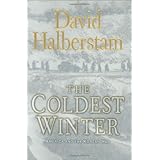
The Coldest Winter: America and the Korean War Review

The Coldest Winter: America and the Korean War
Average Reviews:

(More customer reviews)
Are you looking to buy The Coldest Winter: America and the Korean War? Here is the right place to find the great deals. we can offer discounts of up to 90% on The Coldest Winter: America and the Korean War. Check out the link below:

>> Click Here to See Compare Prices and Get the Best Offers

The Coldest Winter: America and the Korean War ReviewHaving served two tours in the infantry in Korea during the War, and being a Korean War buff, I have a different view of the book than most of the reviewers. Unfortunately, the reviewers think that this book is about the Korean War. In part that is true but the real theme of the book is about how General Douglas MacArthur screwed it up.
The book is not a complete history of the Korean War as some reviewers have touted. It is anything but that. The book centers on the time period during which Gen. MacArthur was in command, both pre-war and until Pres. Truman relieved him of command. What little remains is more of an epilog very briefly describing the aftermath. That is why the book title is "The Coldest Winter" because it focuses on the disastrous defeat of the UN troops during the winter of 1950 as the result of MacArthur's bungling.
Because the book was billed as the most comprehensive history of the Korean War, I was lulled into reading it, only to be sorely disappointed. The first eight months of the War have been extensively covered in books and documentaries with the remaining 2 1/2 years given only cursory exposure, even though several major battles were fought during that period, so Halberstam doesn't expose any new ground. He just regurgitates material already written although he does it in an interesting fashion.
What I had hoped to read about was a thorough rendition of the history following MacArthur and the political decisions that colored the War and that was not there in the book for me. Not that I am not aware of them but a lot happened that is not generally known about and I hoped that Halberstam, with his reputation, would expose that material so that it become common knowledge to those studying or even interested in the War.
Some tout the book as telling the story of the historic escape of the First Marine Division from the Chosen Reservoir. It doesn't at all. The book tells how the Division Commander ignored MacArthur's orders in not racing to the Yalu and consequently the Marines were able make an orderly retreat, which the Army units were unable to do, but Halberstam provides almost no facts concerning the actual retreat, but when he does, the facts are not always correct. For example, the Chinese blew up the bridge between Koto-ri and Hungnam which crossed a narrow mountain gorge. Marine engineers then replaced it with a Bailey Bridge that was parachuted in. Halberstam says that it was the Air Force that dropped the bridge but I was on guard on the mountain above the gorge and I saw the bridge dropped from Marine Corps Flying Boxcars.
The book is not even a complete history of the first eight months of the Korean War. Most of it is devoted to certain battles which illustrated the incompetence either of MacArthur or the officers under him. It is only a partial picture of that period of the War but what there is, is done in remarkable detail.
Halberstam doesn't not highlight some of MacArthur's bad decisions as much as they should have been. While he brings out that it would have been a better strategy if the Marines had by-passed Seoul after landing at Inchon and cut off the retreat of the North Koreans, he doesn't give that mistake the emphasis that it warrants because it was a decision that really prolonged the War. Those familiar with the War are very conscious of that but lay readers may not.
Nor does he allude to the fact that MacArthur violated a basic tenant of fighting a War and that is after winning a battle, it is a cardinal principle that you stop and consolidate before resuming the attack. His failure to adhere to that principle was one reason the UN troops were so vulnerable when the Chinese struck.
One lament I have about the book is that it falls well short of providing its readers of what happened after Gen. Ridgeway took command. The book describes how the Chinese were suffering horrendous losses but Halberstam fails to follow through. The UN counter offensive resulted in more heavy losses to the Chinese as they were pushed back into North Korea, particularly on the eastern flank. The entire Chinese front was in such danger or collapsing that the Chinese sought a truce and Pres. Truman's biggest mistake was to agree to the truce. Had the UN rejected the truce offer, the Chinese would have been forced to retreat deep into N. Korea and that would have been a propitious time for the UN to agree to an armistice. Instead, the war went on for over two more years ending on July 28, 1953. It ended then only because a major Chinese offensive designed to push the Marines back across the Imjin River failed and the Chinese again had run out of steam.
Despite its shortcomings , as a book about the blundering of Gen. MacArthur, it is superb. Unfortunately, it was written 50 years too late. MacArthur was a desk general from the start of WWII and remained so during the Korean War. He really botched up the defense of the Philippines but because the Americans needed a hero, he was made a hero instead of a goat. He should have been relieved of his command. He actually played a subordinate role in the Pacific War which was mainly run by the Navy, but we all can be thankful for the atomic bomb, because if the Japanese had not surrendered, MacArthur would have been in charge of the invasion of Japan.The Coldest Winter: America and the Korean War Overview

Want to learn more information about The Coldest Winter: America and the Korean War?

>> Click Here to See All Customer Reviews & Ratings Now
Read More...