Showing posts with label intelligence. Show all posts

Operation Broken Reed: Truman's Secret North Korean Spy Mission That Averted World War III Review

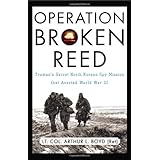
Operation Broken Reed: Truman's Secret North Korean Spy Mission That Averted World War III
Average Reviews:

(More customer reviews)
Are you looking to buy Operation Broken Reed: Truman's Secret North Korean Spy Mission That Averted World War III? Here is the right place to find the great deals. we can offer discounts of up to 90% on Operation Broken Reed: Truman's Secret North Korean Spy Mission That Averted World War III. Check out the link below:

>> Click Here to See Compare Prices and Get the Best Offers

Operation Broken Reed: Truman's Secret North Korean Spy Mission That Averted World War III ReviewFour-five years back I read a terrific book, "The Secrets of Inchon: The Untold Story of the Most Daring Covert Mission of the Korean War," by Eugene Franklin Clark. I blogged about it Sept. 15 of last year. It is the first-person account of a secret, commando-like mission at Inchon that helped turn the tide of the war in favor of the U.N. side. Clark at the time was a Navy lieutenant who at 39 was "getting a little old for the commando game." The book is the record of his two-week adventure--a hair-raising reconnaissance strikes, night raids, firefights, a blazing naval battle between Chinese sailing junks--among the islands and mudlfats of the communist-held Seoul-Inchon harbor area. Clark wrote it in the 1950s, intending it not for publication but as a keepsake for his wife and children and as a personal memorial to the Korean men and women who fought and in many cases died to help him accomplish his mission. The manuscript lay in a safe deposit box for decades and only came to light because historian and novelist Thomas Fleming happened to come across it in doing research for an article about Clark's exploits.
Now I have found another such book, "Operation Broken Reed: Truman's Secret North Korean Spy Mission That Averted World War III" (Carroll & Graf), similar to it in secretiveness and amazing events. Written (extremely well) by its central character, Lt. Col. Arthur L. Boyd (Ret.), and published in October 2007, it is the story of Boyd's participation as a 20-something Army Signal Corps lieutenant in a super-secret mission in North Korea in January 1952. Written as a compelling narrative rather than as a journal-like chronicle, there is so much about it that I like. The astonishing mission of course, but beyond that Boyd manages to give some flavor of the times and an understanding of his personal circumstances (married with a family). It has tension and a palpable sense of danger, and even touches of humor.
Operation Broken Reed had been authorized at the highest of high levels--President Harry Truman. Only he and his closest advisers, and the bare minimum of lower echelon people needed to get it prepared and in operation, knew of it. The little intelligence on the enemy that Truman had been getting was all but worthless. So a 10-man team of Army Rangers, Navy frogmen, Air Force officers and CIA operatives was landed by submarine into North Korea to collect intelligence on enemy capabilities and intentions to help Truman decide whether to escalate the war or work for a truce. They were accompanied by Nationalist Chinese from Formosa/Taiwan posing as Communist Chinese who supposedly had captured the team from a downed American airplane and were escorting them to captivity.
Boyd was selected for the mission because he was a highly qualified Morse code radio operator, was trained and experienced in cryptography, and had a top-secret security clearance. He was to transmit information the team gathered to aircraft over the Sea of Japan. Discovered and ambushed, seven of the team were killed, leaving Boyd alive with two grievously wounded men whom he believes may have died later. In a desperate flight, the wounded reached their rendezvous point and were rescued by an Air Force helicopter that had been called in by a Royal Navy warship that spotted their distress light signal.
Here's the rub: There are no records, transcripts, or other evidence of the operation. Everyone on the mission went under an assumed name (Boyd was "Sergeant Michael Lavern Baker, U.S. Air Force, B-29 radio operator"). Boyd is the only known survivor. He was sworn to secrecy until 1998. Troubled all his life by memories of the brave comrades killed, he decided to write the book to honor their memories.
That is the story Boyd tells. Some readers will consider it to be literally incredible--that is, untrue, incapable of credibility--because of the lack of any corroborating evidence. This is understandable. All I can say is that, as a person with more than a passing interest in and knowledge of the Korean War, I find it to be at the very least highly plausible. I find it to be at the very least highly plausible. Abundant circumstantial evidence held by Boyd and historical evidence enumerated within the book's afterword by Jay T. Young, a former CIA senior military analyst, give great credence to the mission's authenticity. Boyd, now 81, has made a plea for anyone having knowledge or evidence of the mission to come forward and make it publicly known.Operation Broken Reed: Truman's Secret North Korean Spy Mission That Averted World War III Overview

Want to learn more information about Operation Broken Reed: Truman's Secret North Korean Spy Mission That Averted World War III?

>> Click Here to See All Customer Reviews & Ratings Now
Read More...

Operation Kronstadt: The True Story of Honor, Espionage, and the Rescue of Britain's Greatest SpyTheMan with a Hundred Faces Review

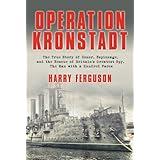
Operation Kronstadt: The True Story of Honor, Espionage, and the Rescue of Britain's Greatest SpyTheMan with a Hundred Faces
Average Reviews:

(More customer reviews)
Are you looking to buy Operation Kronstadt: The True Story of Honor, Espionage, and the Rescue of Britain's Greatest SpyTheMan with a Hundred Faces? Here is the right place to find the great deals. we can offer discounts of up to 90% on Operation Kronstadt: The True Story of Honor, Espionage, and the Rescue of Britain's Greatest SpyTheMan with a Hundred Faces. Check out the link below:

>> Click Here to See Compare Prices and Get the Best Offers

Operation Kronstadt: The True Story of Honor, Espionage, and the Rescue of Britain's Greatest SpyTheMan with a Hundred Faces ReviewI'll start by saying that it is a fascinating read. Yet it is rife with all sort of gratuitous mistakes and naivete. The plot revolves around (1) a story of Paul Dukes, British agent in Petrograd in 1919 and (2) operations of small British torpedo boat force in the same area and the famous raid of Kronstadt. So here goes:
- the adversaries of British boats ("Petropavlovsk" and "Andrei Pervozvanny") are consistently called battlecruisers. "Andrei" was a slow pre-dreadnought (not a dreadnought, as claimed) -- very far from battlecruiser. "Petropavlovsk" was a dreadnought (instead of pre-dreadnought, as suggested by Ferguson), by far more powerful of the two. Another capital ship, "Oleg" was not an armoured cruiser (this name was reserved for bigger and more heavily protected ships).
- there are more than a few passages like this: "With less than 10 days to go before the onset of the White Nights (the plans were in jeopardy)". There is no such thing as "onset of White Nights", contrary to what Fodor's travel guide may think. It's pretty darn White in the end of May, not much different from the middle of June.
- Krasnaya Gorka fort was not manned by "Ingrians", but by a regular Russian garrison. One can easily see how Sarin (a commandant of Terioki) babbled about Ingrians and how that babble was transferred into Gus Agar's diary, but this does not make it any more true (so much for valiant Ingrians holding out against Bolshevik onslaught, etc.).
- purported results of Kronstadt raid: "Petropavlovsk, Andrei Pervozvanni and Pamiat' Azova were all either sank or badly damaged". The truth is that Petropavlovsk was unscathed. Actually, the torpedo track reaching out to Petropavlovsk in the map makes no sense - the ship was pretty much screened by Andrei. Andrei itself took one hit (not two), Pamiat' Azova was sunk with one torpedo (not two). These inaccuracies would have been excusable if the book were published in 1925, but by now there is no sliver of doubt about the actual outcome of the attack.
And there is much more to be found in the gaffe department.
Generally, the book is full of over-dramatization - storms and squalls near Kronstadt (there cannot be any storm worthy of this name in this small body of water), horsemen dashing through Finnish pine forests (in close proximity to St.Petersburg and naval bases, there have always been good roads there), ever so formidable forts (manned by thoroughly degraded fighting force which lacked 90% of commanding officers) etc. etc. The book is written in a jovial, good-ol'-British-lad kind of style. I am used to seeing much more elegant and polished writing coming from British historians.
Well, all this being said, it is a fascinating read - it is the story itself which makes it difficult to put down the book.Operation Kronstadt: The True Story of Honor, Espionage, and the Rescue of Britain's Greatest SpyTheMan with a Hundred Faces OverviewPart Blackhawk Down, part The Riddle of the Sands, former MI6 officer Harry Ferguson has written an extraordinarily gripping non-fiction thriller Operation Kronstadt not only reveals the early days of intelligence services but also uncovers a truly dramatic story from the Russian Revolution involving a daring rescue attempt and a "mission impossible" against the best defended naval target in Russia. By May 1919, when the power struggle between former Tsarists and Bolsheviks hangs in the balance, the only British agent in Russia is trapped and in mortal danger. Mansfield Cumming (alias "the first C") dreams up an audacious-probably suicidal-plan to rescue him, and a young naval officer is sent with a specially selected team into the jaws of the Soviet fleet. This is the remarkable true story of the spy Paul Dukes (the only MI6 officer to be knighted for work in the field) and Gus Agar, whose extraordinary escapade won him the Victoria Cross.

Want to learn more information about Operation Kronstadt: The True Story of Honor, Espionage, and the Rescue of Britain's Greatest SpyTheMan with a Hundred Faces?

>> Click Here to See All Customer Reviews & Ratings Now
Read More...