Showing posts with label military history. Show all posts

Imperial Glory Review

Imperial Glory
Average Reviews:

(More customer reviews)
Are you looking to buy Imperial Glory? Here is the right place to find the great deals. we can offer discounts of up to 90% on Imperial Glory. Check out the link below:

>> Click Here to See Compare Prices and Get the Best Offers

Imperial Glory ReviewOccasionally a new book is released that is so important to the study of the Napoleonic era that it immediately falls into the "must have" category for both Napoleonic scholars and enthusiasts. Imperial Glory is such a book. David Markham has assembled for the first time, all of the bulletins written by Napoleon between 1805 and 1812. Many of them have never been translated into English before, while others were only available to the serious scholar. Additionally, Mr. Markham also checked the translations of those bulletins that had been translated in the 19th Century and found many errors in them.
Napoleon used his bulletins for a variety of reasons: to inform the public and his soldiers of the progress of his campaigns, to praise his soldiers and their officers for the actions, and to ensure his enemies heard of his triumphs. They were published in the government's official newspaper, Le Moniteur, and often hung on doors and posted in public squares throughout the Empire. The veracity of the bulletins has always been open to question, with one of the most frequently used expressions from the Napoleonic era being, "To lie like a bulletin."
Although many of these bulletins were published for propaganda purposes, Mr. Markham does point out most are "reasonably accurate." Furthermore, he writes "[Napoleon's] losses were sometimes described as 'considerable', and he would list specific officers that were lost, along with the numbers of men killed, wounded or taken prisoners."
In addition to all 183 bulletins written from 1805 and 1812, Imperial Glory contains 170 other documents, many of which have never been published in English before. Broken down by year, the book includes:
1805
37 Bulletins of the Grande Armée (complete)
9 Bulletins of Masséna's Army of Italy (complete)
9 Proclamations
3 Decrees
2 Orders of the Day
3 Letters
1 Armistice
1 Treaty of Peace
1806-1807
87 Bulletins (complete)
4 Proclamations
1 Letter
1 Armistice between France and Prussia
1 Armistice between France and Russia
1 Treaty between France and Prussia
1 Treaty between France and Russia
1809
30 Bulletins (complete)
4 Proclamations
2 Proclamations of the King of Saxony
2 Orders of the Day
2 Reports by the Viceroy (Eugène)
3 Letters
1 Treaty between France and Austria
1812
29 Bulletins (Complete)
1 Final dispatch from Paris
1 Order of the Day
1 Letter
21 Field Reports, including:
5 Reports from Marshal Ney
4 Reports from Marshal Murat
2 Reports from Marshal Davout
2 Reports from Eugène
2 Reports from Marshal St Cyr
1 Report of Marshal Macdonald
1 Report from Marshal Oudinot
1 Report from Prince Poniatowski
1 Report from Prince Schwarzenberg
1 Report of Russian General Wittgenstein to Tsar Alexander
1 Report from General Wrede
1813
51 Reports from Le Moniteur, which often include reports from multiple days
2 Proclamations
2 Reports from Marshal Berthier
1 Report from General Vandamme
1 Report from Marshal Ney
1 Report from General Milhaud
6 Letters
1 Armistice
1814
23 Reports from Le Moniteur, including two "bulletins" at the end of the campaign
2 Proclamations
1 Decree
1 Order of the Day
2 Speeches
1 Act of Abdication
The collection of material is by campaign, with a separate chapter covering the different campaigns fought in that year or years. Within each chapter, the material is also arranged chronologically. This is an ideal arrangement, for not only does it permit the reader to follow the campaigns as seen through the official press releases, but it also provides great insight into how Napoleon managed his propaganda campaign.
The supplementary material is fascinating. I found particularly interesting the after-action reports on various battles written by the unit commander to the Imperial Headquarters. These reports were not written for public consumption and often were the first communication between a subordinate commander and the army headquarters. These reports contain information that would not necessarily be placed in the bulletins. Mr. Markham also included all the bulletins written by Marshal Masséna in 1805. He was in command of the Army of Italy and operating as an independent commander. Masséna's bulletins are in chronological order and interspersed with Napoleon's. Reading them together will give the reader a good feel for the two individuals' writing styles.
Mr. Markham and Greenhill Books are to be commended for making available to the public, material that has long been inaccessible to all but those with extensive libraries. Imperial Glory is an impressive collection of documents that every Napoleonic library should own. Do not delay buying Imperial Glory. It will be snatched up quickly and soon will be out of print.Imperial Glory OverviewNapoleon's bulletins are of immense historical significance, reporting as they do on all the key battles of Napoleon's campaigns. They contain not only important military information, but fascinating political, social and personal commentaries that are critical to understanding Napoleon the man as well as Napoleon the soldier. Presented complete for the first time in English, and supported by Markham's historical and biographical notes, the bulletins cover the key period between the Battle of Austerlitz in 1805 and the collapse of Napoleon's Empire in 1814. The bulletins describe military operations, pick out distinguished officers and units, and present Napoleon's own interpretation of battles lost and won. Also included are various key reports from marshals and others, including the bulletins of the Army of Italy commanded by Massena in 1805. Most of this additional material has never been published in English until now. Imperial Glory is an invaluable contribution to literature on the Napoleonic Wars and a key book for anyone who would like to learn more about one of history's most remarkable and colorful leaders.

Want to learn more information about Imperial Glory?

>> Click Here to See All Customer Reviews & Ratings Now
Read More...

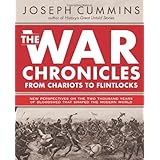
The War Chronicles: From Chariots to Flintlocks: New Perspectives on the Two Thousand Years of Bloodshed That Shaped the Modern World Review

The War Chronicles: From Chariots to Flintlocks: New Perspectives on the Two Thousand Years of Bloodshed That Shaped the Modern World
Average Reviews:

(More customer reviews)
Are you looking to buy The War Chronicles: From Chariots to Flintlocks: New Perspectives on the Two Thousand Years of Bloodshed That Shaped the Modern World? Here is the right place to find the great deals. we can offer discounts of up to 90% on The War Chronicles: From Chariots to Flintlocks: New Perspectives on the Two Thousand Years of Bloodshed That Shaped the Modern World. Check out the link below:

>> Click Here to See Compare Prices and Get the Best Offers

The War Chronicles: From Chariots to Flintlocks: New Perspectives on the Two Thousand Years of Bloodshed That Shaped the Modern World ReviewI have mixed feelings about this book. On the one hand, it is a well layed out and designed general introduction to important campaigns and battles. On the other hand, the book is lacking in accuracy and detail for the specific episodes it covers. This is a almost a necessay consequence of being a general history and it would be unfair not to allow for some shortcomings. I will try to judge this book for what it is intended to be.
Each chapter begins with a summary of the conflict. A short history of the campaugn follows. Next, the author focuses on a specific battle of the campaign that he deems most important. The commanders are then profiled. Last are a series of short sidebar articles on random aspects of the historic episode. The layout is clean and eay to follow.
The choice of campaigns is slanted toward the anglophone world, but not by as much as similar books on the market. Central Europe and the far east get a bit of a mention. Russia is not given her due, in my opinion nor is Byzantium.
I could sit here all day and pick apart the details. I don't think it would be entirely fair, as I said before, given the mission of the book. On the other hand, a look at the bibliography disturbs me. Is this a select bibliography, designed to help beginners to military history? Is it the complete set of works the author consulted? For example, by the chapter on the Thirty Years War, which I have some knowledge of, I am not sure if the author read anything beyond the lone source listed: Wedgewood's history of the conflict.
The other problem I have is the selection of picures. It may seem a minor matter, but I think not. The author frequently selects latter day artistic interpretations of the events rather than something historically accurate. For example, the chapter on the Gallic Wars has a full page reproduction of the Battle of Alesia, which depicts the Roman-Gaul struggle as a fight between two 16th century armies, with Landsknechts and Swiss, fully armoured knights and canons. Also, a medieval painting showing "Roman" troops dressed in medieval outfits is particularly unneccessary. I understand why the artists may have painted what they did, but why did the author see fit to include them?
And no, no "New Perspectives" show up in the book as promised on the cover. There is still plenty to recommend as long as the reader isn't expecting a scholarly treatment of the subject. All together, a decent coffee table book on military history, suitable for beginners.The War Chronicles: From Chariots to Flintlocks: New Perspectives on the Two Thousand Years of Bloodshed That Shaped the Modern World Overview

Want to learn more information about The War Chronicles: From Chariots to Flintlocks: New Perspectives on the Two Thousand Years of Bloodshed That Shaped the Modern World?

>> Click Here to See All Customer Reviews & Ratings Now
Read More...

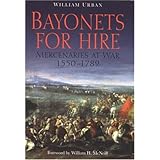
Bayonets for Hire: Mercenaries at War, 1550-1789 Review

Bayonets for Hire: Mercenaries at War, 1550-1789
Average Reviews:

(More customer reviews)
Are you looking to buy Bayonets for Hire: Mercenaries at War, 1550-1789? Here is the right place to find the great deals. we can offer discounts of up to 90% on Bayonets for Hire: Mercenaries at War, 1550-1789. Check out the link below:

>> Click Here to See Compare Prices and Get the Best Offers

Bayonets for Hire: Mercenaries at War, 1550-1789 ReviewWilliam Urban (Professor of History, Monmouth College) presents Bayonets for Hire: Mercenaries at War 1550-1789, an in-depth scrutiny of how mercenaries - and increasingly, mercenary armies - affected military history through the late 1600s and into the 1700's. The evolution of mercenary service as an increasingly sophisticated profession is traced, though the volunteer armies of the French Revolution would temporarily dethrone the power of money with the power of patriotism. Bridging the tumultuous transformation of the medieval era to modern nation-states, Bayonets for Hire a through study of a unique dynamic of war and conquest in early modern Europe and a highly recommended addition to public and college library military history collections.Bayonets for Hire: Mercenaries at War, 1550-1789 Overview
From the Greek professional armies of Alexander, through the Hundred Years War, indeed, to today, mercenaries have been ever-present, their role constantly evolving. In this compelling new history William Urban takes up their captivating and turbulent story from 1550 to 1763. The 16th century saw the beginning of a revolution in military technology and strategy. Political and economic systems were radically evolving, too. Mercenaries are often considered a marginal phenomenon, but Urban shows that they were integral to these developments. Increasingly not just individual soldiers and officers became mercenaries, but entire armies of well-equipped, well-trained, and, in time, experienced soldiers were available to friends and allies. By the late-1600s these armies had evolved into large and efficient fighting forces. By the mid-1700s military service had become a profession. The old-fashioned mercenary was less common, but he would not disappear until swept away by the volunteer armies of the French Revolution.


Want to learn more information about Bayonets for Hire: Mercenaries at War, 1550-1789?

>> Click Here to See All Customer Reviews & Ratings Now
Read More...

The War Chronicles: From Flintlocks to Machine Guns: A Global Reference of All the Major Modern Conflicts Review

The War Chronicles: From Flintlocks to Machine Guns: A Global Reference of All the Major Modern Conflicts
Average Reviews:

(More customer reviews)
Are you looking to buy The War Chronicles: From Flintlocks to Machine Guns: A Global Reference of All the Major Modern Conflicts? Here is the right place to find the great deals. we can offer discounts of up to 90% on The War Chronicles: From Flintlocks to Machine Guns: A Global Reference of All the Major Modern Conflicts. Check out the link below:

>> Click Here to See Compare Prices and Get the Best Offers

The War Chronicles: From Flintlocks to Machine Guns: A Global Reference of All the Major Modern Conflicts ReviewMaybe you are familiar with the wars involving the United States. But have you ever wondered about the wars that were taking place in other parts of the world? "The War Chronicles: From Flintlocks to Machine Guns" by Joseph Cummins contains short sections on all wars throughout the world from the French Revolution in 1783 to the Iran-Iraq War of 1988.
The book is organized with 21 chapters. It gives the dates of the conflict. You see who the principle combatants and the theaters of operations. The casualties are given. You get a succinct sketch of the entire conflict. A timeline of events is shared. This followed by a narrative of the complete war in greater detail including a thorough description of the key battle. A biography of the two principle leaders on each side is shared. This is followed by a profile segment which gives details of the structure, organization, and military hardware involved.
Joseph Cummins does a masterful job as he describes each conflict with an attention-grabbing energy that brings the time, people, and crisis to life in a narrative history style. I personally enjoyed his short biographies of the two principle leaders on each side. What a great reference for secondary students having to do reports of the key war leaders.
This is more than a coffee table reference book. It would make an excellent reference book for any military history buff. It also would be an outstanding text book for an introductory military history survey course and would be a great addition to any school or community library. Any soldier, sailor, airman, or marine would be proud to have it in their personal library.
This is a follow-up work to Joseph Cummins book "The War Chronicles: From Chariots to Flintlocks: New Perspectives on the Two Thousand Years of Bloodshed That Shaped the Modern World."
Review by Jimmie Aaron KeplerThe War Chronicles: From Flintlocks to Machine Guns: A Global Reference of All the Major Modern Conflicts OverviewA Global Survey of Modern Warfare, from the First Fervid Days of the French Revolution of 1789 to the Bloody Stalemate that Ended the Iran-Iraq War in 1988

In the modern era, warfare entered a new phase. Technological innovation yielded evermore destructive weaponry, international communications and alliances greatly extended the reach of conflicts, and military strategists increasingly targeted infrastructure and civilians, while new media—first photography, then film and television—conveyed the horror and brutality of industrialized combat to those who had the good fortune to live beyond the battle zones.

The War Chronicles: From Flintlocks to Machine Guns adopts the innovative and accessible format of its predecessor, which spanned the period from 500 BC to the American Revolution, to chart the astonishingly rapid evolution of modern warfare. In doing so, it traces the transformation of battle tactics, from the prearranged set-piece encounters of the Napoleonic Wars to the massive naval landings and aerial bombardments of World War II, explains the scientific innovations that yielded the machine gun, the tank, and the atom bomb, and vividly renders the key victories that turned the tide of war, from Waterloo to Gettysburg and D-Day. At the same time, it reiterates the constants of conflict: the slaughters and massacres, including the Holocaust and the little-known Taiping Rebellion, which killed up to forty million Chinese; the personal sacrifices made by those battling tyranny, among them the rebels of revolutionary France, Greece, and Mexico; and the extraordinary influence of charismatic leaders, ranging from Napoleon and Pancho Villa to Mao Zedong and Hitler.

Sweeping in its scope, yet intimate in its insights into the motivations of politicians, strategists, commanders, and soldiers, this is a collection that will enhance your understanding of the modern world and your own place in it.


Want to learn more information about The War Chronicles: From Flintlocks to Machine Guns: A Global Reference of All the Major Modern Conflicts?

>> Click Here to See All Customer Reviews & Ratings Now
Read More...

Army Life in Virginia: The Civil War Letters of George G. Benedict Review

Army Life in Virginia: The Civil War Letters of George G. Benedict
Average Reviews:

(More customer reviews)
Are you looking to buy Army Life in Virginia: The Civil War Letters of George G. Benedict? Here is the right place to find the great deals. we can offer discounts of up to 90% on Army Life in Virginia: The Civil War Letters of George G. Benedict. Check out the link below:

>> Click Here to See Compare Prices and Get the Best Offers

Army Life in Virginia: The Civil War Letters of George G. Benedict ReviewOne of the most useful and interesting publishing phenomena of the past decade has been the appearance of a number of collections of Civil War diaries and letters written not by famous names but by the line officers and common soldiers who actually fought the war--and who suffered the diseases, quibbles and boredom of camp life in the often-long intervals between battles. I found this particular book especially insightful on both the details of military life and the ambience of the war years. The letters themselves are marvelous--even in their mundane concerns. This truly is a slice of "real life" that a standard history text can't offer (the book reminds me of the wonderful collections of courts-martial, reports and papers assembled by Dr. Thomas Lowry, who is consistently one of our most interesting Civil War historians). Credited as the book's "editor," Eric Ward has actually done far more than simply getting the narrative into shape for publication (a tough enough job by itself). Ward has set the book off superbly, and his interlocutions to place Benedict's jottings in context are masterful in their accuracy, succinctness and insight. For those seriously interested in Civil War studies, or simply for a reader anxious to enter that bygone world for the first time, this book is an excellent choice. Very well done!Army Life in Virginia: The Civil War Letters of George G. Benedict OverviewGeorge G. Benedict was one of thousands of young men who enlisted for the Union cause in the late summer of 1862 when the outcome of the Civil War was yet to be decided. But in addition to his duties as a soldier, Benedict also worked as a correspondent for his hometown newspaper, the Burlington (Vermont) Free Press. Benedict's thirty-one letters gave the folks back home a firsthand account of army life in the Civil War. Now, by supplementing these letters with official documents, newspaper accounts, and comrade's letters, editor Eric Ward expands on this account, providing a fuller and more accurate picture of army life in Virginia.

Want to learn more information about Army Life in Virginia: The Civil War Letters of George G. Benedict?

>> Click Here to See All Customer Reviews & Ratings Now
Read More...

The Jungle War: Mavericks, Marauders and Madmen in the China-Burma-India Theater of World War II Review

The Jungle War: Mavericks, Marauders and Madmen in the China-Burma-India Theater of World War II
Average Reviews:

(More customer reviews)
Are you looking to buy The Jungle War: Mavericks, Marauders and Madmen in the China-Burma-India Theater of World War II? Here is the right place to find the great deals. we can offer discounts of up to 90% on The Jungle War: Mavericks, Marauders and Madmen in the China-Burma-India Theater of World War II. Check out the link below:

>> Click Here to See Compare Prices and Get the Best Offers

The Jungle War: Mavericks, Marauders and Madmen in the China-Burma-India Theater of World War II ReviewThis book is different from other Astor titles in that it lacks the personal accounts he's known for. If you're looking for a book on the CBI with lots of personal stories/recollections, you'll be disappointed by this book. However, this book provides good insights into the minds and characters of some of the CBI's main personalities: Slim, Stilwell, Chennault, and Mountbatten. It also provides a fairly well-detailed account of the war in the CBI, predominantly the fighting in Burma. Unfortunately, it suffers from an almost complete absence of maps, so unless your knowledge of Indian and Burmese geography is excellent you might get a bit lost when trying to figure out where battles and such are taking place.The Jungle War: Mavericks, Marauders and Madmen in the China-Burma-India Theater of World War II Overview

Want to learn more information about The Jungle War: Mavericks, Marauders and Madmen in the China-Burma-India Theater of World War II?

>> Click Here to See All Customer Reviews & Ratings Now
Read More...

Dear Harry: Truman's Mailroom, 1945-1953 Review

Dear Harry: Truman's Mailroom, 1945-1953
Average Reviews:

(More customer reviews)
Are you looking to buy Dear Harry: Truman's Mailroom, 1945-1953? Here is the right place to find the great deals. we can offer discounts of up to 90% on Dear Harry: Truman's Mailroom, 1945-1953. Check out the link below:

>> Click Here to See Compare Prices and Get the Best Offers

Dear Harry: Truman's Mailroom, 1945-1953 ReviewWas using this book for research of someone. It had letters in it that do not appear elsewhere. Thank you for such an interesting readDear Harry: Truman's Mailroom, 1945-1953 Overview"Taps into the Truman era in a way no other book has. It is a grand collection, lively, full of surprise, insight, humor, and humanity. In all, a very welcome event." --David McCullough

Want to learn more information about Dear Harry: Truman's Mailroom, 1945-1953?

>> Click Here to See All Customer Reviews & Ratings Now
Read More...

Patton's Peers: The Forgotten Allied Field Army Commanders of the Western Front, 1944-45 Review

Patton's Peers: The Forgotten Allied Field Army Commanders of the Western Front, 1944-45
Average Reviews:

(More customer reviews)
Are you looking to buy Patton's Peers: The Forgotten Allied Field Army Commanders of the Western Front, 1944-45? Here is the right place to find the great deals. we can offer discounts of up to 90% on Patton's Peers: The Forgotten Allied Field Army Commanders of the Western Front, 1944-45. Check out the link below:

>> Click Here to See Compare Prices and Get the Best Offers

Patton's Peers: The Forgotten Allied Field Army Commanders of the Western Front, 1944-45 ReviewAuthor English has written a very useful book on the Allied army commanders other than George Patton who served in France and Germany during 1944 and 1945. For reference, the organization was as follows:
SHAEF Commander - Eisenhower
21st Army Group - Montgomery
British 2nd Army - Dempsey
Canadian 1st Army - Crerar
12th Army Group - Bradley
US 1st Army - Hodges
US 9th Army - Simpson
US 3rd Army - Patton
6th Army Group - Devers
US 7th Army - Patch
French 1st Army - De Lattre
As the author states, there are many books on Patton, but only one biography of Patch, Hodges, and Crerar, only one in English on De Lattre, and none on Simpson or Dempsey. This work brings these other commanders to life in a comparative framework.
The author's biases are a little too apparent -- namely he downgrades Patton (even mentioning non-combatant correspondent Andy Rooney's less than flattering appraisal of Patton) and only Montgomery and Dempsey really get high marks. Although a Canadian, the author's treatment of Crerar left me puzzled as he evidently preferred Crerar's understudy Simonds to Crerar. His passing remarks on Eisenhower are generally negative, and the conflict over Dever's effectiveness receives more coverage than I believe it deserved in this context (except when Devers wanted to cross the Rhine in 1944.) Of the Americans, only Simpson came off well, and specifically his ability to get along with Montgomery was a big plus. In fact, the constant carping by one commander about another (such as Haislip's comments on Patch which the author dismisses) made me want to say in rebuttal, "OK, but they were good enough to win!"
The writing was often redundant when more than one army was involved in a campaign, and the reader can skip over reiterations where desired. In addition, a lot of space is devoted to troop movements that add little to biographies of the commanders, especially when the battles did not reflect positively or negatively on the army commander being discussed. I was also put off by the author's treatment of Montgomery (was always right -- Eisenhower got blamed for allowing Market-Garden to precede the opening of the Scheldt.) The presentation of command and staff organizations was unusual in that the British (Canadian) organization was given first and the American then compared to it.
All that being said, this book is a very useful introduction to Crerar, Simonds, Dempsey, Simpson, Hodges, Patch and De Lattre who are usually just names in the campaign on the Western Front. For that the author is to be commended, but the reader will probably feel the need to delve further into these commanders to answer many questions the author implies concerning their effectiveness. Pehaps the problem was space in this volume, but I definitely wanted more information on Simpson and Dempsey. Patch had seen action in the Pacific, and his record there important but only mentioned in passing. In short, the author left me wanting much more. He could also have included the two army commanders in Italy to complete the picture.
I recommend this book to those interested in the Western Front in World War II as an introduction to the Allied army commanders. There is much valuable information here, but don't expect to go away feeling that you have a handle on all the commanders. That will take additional reading and study, and some of the author's comments definitely require more research before being accepted at face value. Like I said, this is a good introduction.Patton's Peers: The Forgotten Allied Field Army Commanders of the Western Front, 1944-45 OverviewThrough the force of his personality and the headline-grabbing advance of his U.S. Third Army, General George S. Patton has eclipsed the other six men who, like him, led field armies in the great Allied campaign to liberate northwest Europe in 1944-45. Certain to rank among the classics of World War II history like Eisenhower's Lieutenants by Russell Weigley, Patton's Peers presents a masterful reassessment of the eleven-month struggle from D-Day to Germany's surrender, shedding long overdue light on the contributions of these forgotten Allied field army commanders.
Seasoned military historian John A. English unearths the vital roles played by these six generals. As the leader of an army of several hundred thousand troops, each had to plan operations days and weeks in advance, coordinate air support and assess intelligence, give orders to corps commanders, manage a staff of sometimes difficult subordinates, and deal with superiors like Eisenhower, Bradley, and Montgomery. Some performed less ably than the rest while others rivalled Patton in their achievements. All deserve to be lifted from Patton's shadow.

Want to learn more information about Patton's Peers: The Forgotten Allied Field Army Commanders of the Western Front, 1944-45?

>> Click Here to See All Customer Reviews & Ratings Now
Read More...

Battle for Europe: How the Duke of Marlborough Masterminded the Defeat of the French at Blenheim Review

Battle for Europe: How the Duke of Marlborough Masterminded the Defeat of the French at Blenheim
Average Reviews:

(More customer reviews)
Are you looking to buy Battle for Europe: How the Duke of Marlborough Masterminded the Defeat of the French at Blenheim? Here is the right place to find the great deals. we can offer discounts of up to 90% on Battle for Europe: How the Duke of Marlborough Masterminded the Defeat of the French at Blenheim. Check out the link below:

>> Click Here to See Compare Prices and Get the Best Offers

Battle for Europe: How the Duke of Marlborough Masterminded the Defeat of the French at Blenheim ReviewI had noticed this book while picking through works on the War of Spanish Succession here on amazon and I placed it on my Christmas list. I was surprised to open it and began reading it on Christmas day and couldn't put it down. I finished it the next day after reading through the night.
Spencer pens an amazing book that is said to concern the 1704 Battle of Blenheim in Bavaria. Instead, the book deals with a period of history of approximately 1670-1705, the time in world history where empires were rising and falling and what could be termed as the "calm between the storms" of the Reformation and Enlightenment. Spencer weaves and intricate and flowing tale of the great clash of arms between the marshalls of Louis XIV and the Duke of Marlborough, backing the narrative of the war and the battle with political intrigues, explanations of 18th century warfare, and a look at the three major characters of the book, the Duke, Louis XIV, and Prince Eugene of Savoy.
All in all, this book is an excellent first work from Spencer and I fervently await subsequent books.Battle for Europe: How the Duke of Marlborough Masterminded the Defeat of the French at Blenheim OverviewA compelling history of the bloody battle that ended Louis XIV's dream of European domination and changed the course of history
"Had it not been for Blenheim, all Europe might at this day suffer under the effect of French conquests resembling those of Alexander in extent and those of the Romans in durability."-Sir Edward Creasy, The Fifteen Decisive Battles of the World
In 1704, the armies of the French king Louis XIV, undefeated for two generations, were poised to extend the French frontiers to the Rhine and install a French prince on the Spanish throne.But as French forces marched toward Vienna, allied armies under the command of John Churchill, Duke of Marlborough, and Prince Eugène of Savoy set out to oppose them. The two forces met at Blenheim, in Bavaria, and the French were utterly defeated, ending France's dream of European domination. Based on original sources, this page-turning narrative brings the battle to life, effortlessly moving from the deliberations of kings to the travails of the common foot soldier.
"Thoughtful, interesting, and well-written. . . . Spencer recovers an approach and authorial voice associated with Winston Churchill, whom indeed he quotes effectively and appropriately. . . . From the excellent scene-setting of the Prologue to the effective battle descriptions, which ably draw on the memoirs of the participants, Charles Spencer successfully combines narrative with analysis."-The Sunday Telegraph
"A remarkable debut . . . not to be missed."-Evening Standard
"Charles Spencer explores the decisive battle of Blenheim, the campaign that broke Louis XIV's domination of Europe and established the enduring reputation of the British redcoat . . . in this compelling, page-turning narrative . . . of a battle that changed the destiny of Europe."-Soldier

Want to learn more information about Battle for Europe: How the Duke of Marlborough Masterminded the Defeat of the French at Blenheim?

>> Click Here to See All Customer Reviews & Ratings Now
Read More...

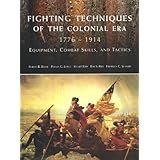
Fighting Techniques of the Colonial Era: 1776--1914 Equipment, Combat Skills and Tactics Review

Fighting Techniques of the Colonial Era: 1776--1914 Equipment, Combat Skills and Tactics
Average Reviews:

(More customer reviews)
Are you looking to buy Fighting Techniques of the Colonial Era: 1776--1914 Equipment, Combat Skills and Tactics? Here is the right place to find the great deals. we can offer discounts of up to 90% on Fighting Techniques of the Colonial Era: 1776--1914 Equipment, Combat Skills and Tactics. Check out the link below:

>> Click Here to See Compare Prices and Get the Best Offers

Fighting Techniques of the Colonial Era: 1776--1914 Equipment, Combat Skills and Tactics ReviewThis book was not quite what I had expected. I thought it would spend more time on the American Revolution, but it did not. On second look, I found that the book was well written and covered the period found in the title in a good way. The book broadened my scope of knowledge about this time period and I am very satisfied with my purchase.Fighting Techniques of the Colonial Era: 1776--1914 Equipment, Combat Skills and Tactics OverviewAn essential guide for military buffs and a comprehensive re - source for a transitional period in military history, Fighting Techniques of the Colonial Age shows in detail the methods by which European armies gained and lost ascendancy on the battlefields of the colonial era.

Want to learn more information about Fighting Techniques of the Colonial Era: 1776--1914 Equipment, Combat Skills and Tactics?

>> Click Here to See All Customer Reviews & Ratings Now
Read More...

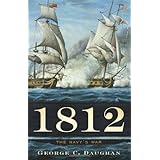
1812: The Navy's War Review

1812: The Navy's War
Average Reviews:

(More customer reviews)
Are you looking to buy 1812: The Navy's War? Here is the right place to find the great deals. we can offer discounts of up to 90% on 1812: The Navy's War. Check out the link below:

>> Click Here to See Compare Prices and Get the Best Offers

1812: The Navy's War ReviewOften, books don't live up to the hype in the "blurbs" written in the editorial reviews. In this case, though, they are on the money. This book is exciting to read. That "can't put it down" quality isn't something I find in this genre often, but 1812 kept me up until the wee hours last night. It's a new perspective, meticulously researched and beautifully drawn. Highly recommended whether you are an 1812 fan, a fan of naval history, or even someone who typically shies away from military history -- I'd have to agree with one of the editorial reviews that says every American should read this book.1812: The Navy's War OverviewAt the outbreak of the War of 1812, America's prospects looked dismal. It was clear that the primary battlefield would be the open ocean-but America's war fleet, only twenty ships strong, faced a practiced British navy of more than a thousand men-of-war. Still, through a combination of nautical deftness and sheer bravado, the American navy managed to take the fight to the British and turn the tide of the war: on the Great Lakes, in the Atlantic, and even in the eastern Pacific.
In 1812: The Navy's War, prizewinning historian George C. Daughan tells the thrilling story of how a handful of heroic captains and their stalwart crews overcame spectacular odds to lead the country to victory against the world's greatest imperial power. A stunning contribution to military and national history, 1812: The Navy's War is the first complete account in more than a century of how the U.S. Navy rescued the fledgling nation and secured America's future.

Want to learn more information about 1812: The Navy's War?

>> Click Here to See All Customer Reviews & Ratings Now

Read More...